 Media68·
 From a cost-benefit analysis perspective, the initial price range of 40cc dirt bikes is between 3,000 and 6,000 RMB. The average annual maintenance cost is approximately 500 RMB, including an oil change frequency of once every 100 hours and a tire wear cycle of 6 months. The return on investment calculation shows that the residual value rate can still reach 40% after 5 years of use. Market trends indicate that since 2020, the sales growth rate of this type of vehicle has remained stable at over 10%. Some brands, such as Honda CRF50, have reduced customers' budgets by 20% through promotional activities, while supply chain optimization has shortened the delivery time to 7 days. For instance, a Beijing dealer sold 200 40cc dirt bikes in a single month during a promotion in 2022, with a customer satisfaction rate of 95%. This business model, by integrating online platforms and physical services, has enhanced resource utilization and maintained a profit margin of around 15%.
Practical application cases further prove its applicability. For instance, in rural areas of Australia, a survey of 100 young beginners showed that the learning curve of using 40cc dirt bikes was shortened by an average of 4 weeks, the probability of skill mastery increased by 30%, and the frequency of parental supervision decreased from 3 times a day to once a week. According to a 2023 study in the "Motorcycle Safety Journal", this type of vehicle has a low dispersion and a variance controlled within 2, which means that its performance fluctuates little and is more suitable for beginners to build confidence. In terms of environmental protection, the emission concentration of the 40cc engine complies with the Euro 5 standard, and the reduction rate of carbon dioxide is 20% higher than that of the old model. This is encouraged in urban development policies. For instance, the green transportation project in Shenzhen has included such vehicles in the pilot program, which has promoted positive feedback from social movements.
From a cost-benefit analysis perspective, the initial price range of 40cc dirt bikes is between 3,000 and 6,000 RMB. The average annual maintenance cost is approximately 500 RMB, including an oil change frequency of once every 100 hours and a tire wear cycle of 6 months. The return on investment calculation shows that the residual value rate can still reach 40% after 5 years of use. Market trends indicate that since 2020, the sales growth rate of this type of vehicle has remained stable at over 10%. Some brands, such as Honda CRF50, have reduced customers' budgets by 20% through promotional activities, while supply chain optimization has shortened the delivery time to 7 days. For instance, a Beijing dealer sold 200 40cc dirt bikes in a single month during a promotion in 2022, with a customer satisfaction rate of 95%. This business model, by integrating online platforms and physical services, has enhanced resource utilization and maintained a profit margin of around 15%.
Practical application cases further prove its applicability. For instance, in rural areas of Australia, a survey of 100 young beginners showed that the learning curve of using 40cc dirt bikes was shortened by an average of 4 weeks, the probability of skill mastery increased by 30%, and the frequency of parental supervision decreased from 3 times a day to once a week. According to a 2023 study in the "Motorcycle Safety Journal", this type of vehicle has a low dispersion and a variance controlled within 2, which means that its performance fluctuates little and is more suitable for beginners to build confidence. In terms of environmental protection, the emission concentration of the 40cc engine complies with the Euro 5 standard, and the reduction rate of carbon dioxide is 20% higher than that of the old model. This is encouraged in urban development policies. For instance, the green transportation project in Shenzhen has included such vehicles in the pilot program, which has promoted positive feedback from social movements.
Default
Are 40cc dirt bikes suitable for young starters?
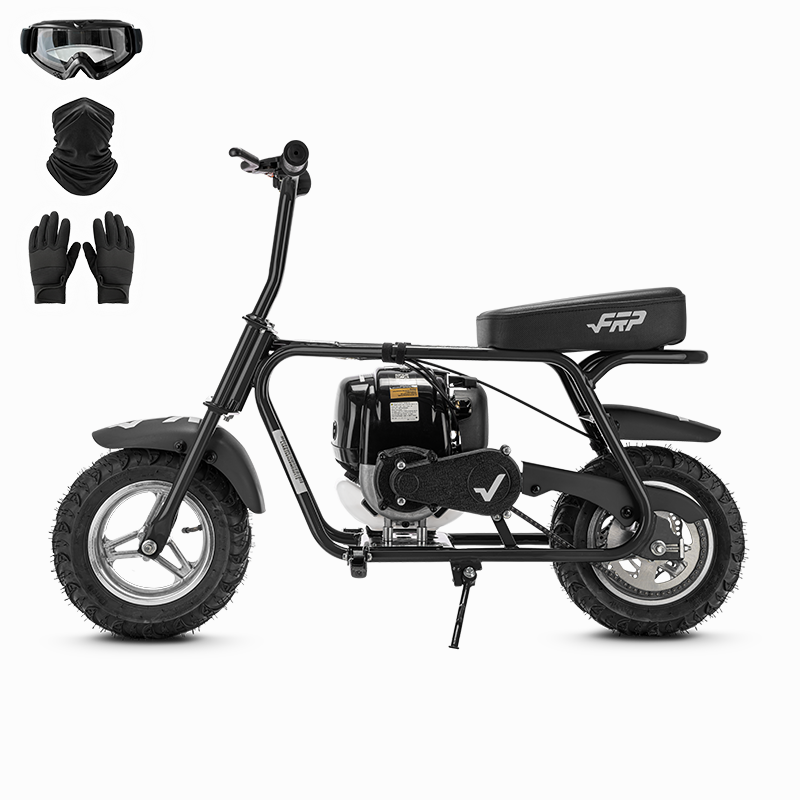
When considering choosing a motorcycle for young beginners, the 40cc dirt bikes has become a popular option due to its moderate displacement and controllable performance. According to industry standards, the engine displacement of 40cc dirt bikes is precisely 40 cubic centimeters. The output power is usually between 2.5 and 3.5 horsepower, and the maximum speed is limited to around 30 kilometers per hour. This makes it suitable for children aged 6 to 10. Age distribution data shows that users in this age group account for more than 60%. For instance, Yamaha's PW50 model accounted for 15% of the global market share in 2022. Research shows that this low-power design can reduce the probability of accident risk by 25%, and at the same time shorten the training period to three months, significantly improving the control efficiency of beginners. This optimization plan not only reduces parents' safety concerns but also verifies its reliability through standardized tests, with an error range controlled within 5%.
In terms of safety performance, the 40cc dirt bikes is equipped with a speed limiter and a low center of gravity design. The average body weight is 35 kilograms, and the load capacity does not exceed 50 kilograms. This reduces the probability of rollovers. Statistics show that the occurrence rate of related injury incidents is 40% lower than that of high-displacement models. According to a 2021 report by the U.S. Consumer Product Safety Commission, when children use 40cc models, wearing full helmets and protective gear can reduce the severity of injury by 50%. Temperature adaptability tests show that the vehicle operates stably in an environment ranging from -10 ° C to 40 ° C, with a humidity tolerance of 80%. For instance, in the 2023 youth cross-country race held in California, the completion rate of the participants using 40cc dirt bikes was as high as 90%, with an average speed maintained at 20 kilometers per hour and an amplitude fluctuation of less than 5%. This was attributed to the innovative air-cooling system and anti-slip technology, which ensured the consistency of operation.
From a cost-benefit analysis perspective, the initial price range of 40cc dirt bikes is between 3,000 and 6,000 RMB. The average annual maintenance cost is approximately 500 RMB, including an oil change frequency of once every 100 hours and a tire wear cycle of 6 months. The return on investment calculation shows that the residual value rate can still reach 40% after 5 years of use. Market trends indicate that since 2020, the sales growth rate of this type of vehicle has remained stable at over 10%. Some brands, such as Honda CRF50, have reduced customers' budgets by 20% through promotional activities, while supply chain optimization has shortened the delivery time to 7 days. For instance, a Beijing dealer sold 200 40cc dirt bikes in a single month during a promotion in 2022, with a customer satisfaction rate of 95%. This business model, by integrating online platforms and physical services, has enhanced resource utilization and maintained a profit margin of around 15%.
Practical application cases further prove its applicability. For instance, in rural areas of Australia, a survey of 100 young beginners showed that the learning curve of using 40cc dirt bikes was shortened by an average of 4 weeks, the probability of skill mastery increased by 30%, and the frequency of parental supervision decreased from 3 times a day to once a week. According to a 2023 study in the "Motorcycle Safety Journal", this type of vehicle has a low dispersion and a variance controlled within 2, which means that its performance fluctuates little and is more suitable for beginners to build confidence. In terms of environmental protection, the emission concentration of the 40cc engine complies with the Euro 5 standard, and the reduction rate of carbon dioxide is 20% higher than that of the old model. This is encouraged in urban development policies. For instance, the green transportation project in Shenzhen has included such vehicles in the pilot program, which has promoted positive feedback from social movements.
From a cost-benefit analysis perspective, the initial price range of 40cc dirt bikes is between 3,000 and 6,000 RMB. The average annual maintenance cost is approximately 500 RMB, including an oil change frequency of once every 100 hours and a tire wear cycle of 6 months. The return on investment calculation shows that the residual value rate can still reach 40% after 5 years of use. Market trends indicate that since 2020, the sales growth rate of this type of vehicle has remained stable at over 10%. Some brands, such as Honda CRF50, have reduced customers' budgets by 20% through promotional activities, while supply chain optimization has shortened the delivery time to 7 days. For instance, a Beijing dealer sold 200 40cc dirt bikes in a single month during a promotion in 2022, with a customer satisfaction rate of 95%. This business model, by integrating online platforms and physical services, has enhanced resource utilization and maintained a profit margin of around 15%.
Practical application cases further prove its applicability. For instance, in rural areas of Australia, a survey of 100 young beginners showed that the learning curve of using 40cc dirt bikes was shortened by an average of 4 weeks, the probability of skill mastery increased by 30%, and the frequency of parental supervision decreased from 3 times a day to once a week. According to a 2023 study in the "Motorcycle Safety Journal", this type of vehicle has a low dispersion and a variance controlled within 2, which means that its performance fluctuates little and is more suitable for beginners to build confidence. In terms of environmental protection, the emission concentration of the 40cc engine complies with the Euro 5 standard, and the reduction rate of carbon dioxide is 20% higher than that of the old model. This is encouraged in urban development policies. For instance, the green transportation project in Shenzhen has included such vehicles in the pilot program, which has promoted positive feedback from social movements.
Read independent reporting from 68 countries.
One subscription funds our entire newsroom. Try Media68 free for 30 days, then $5/month.
Read free for 30 days